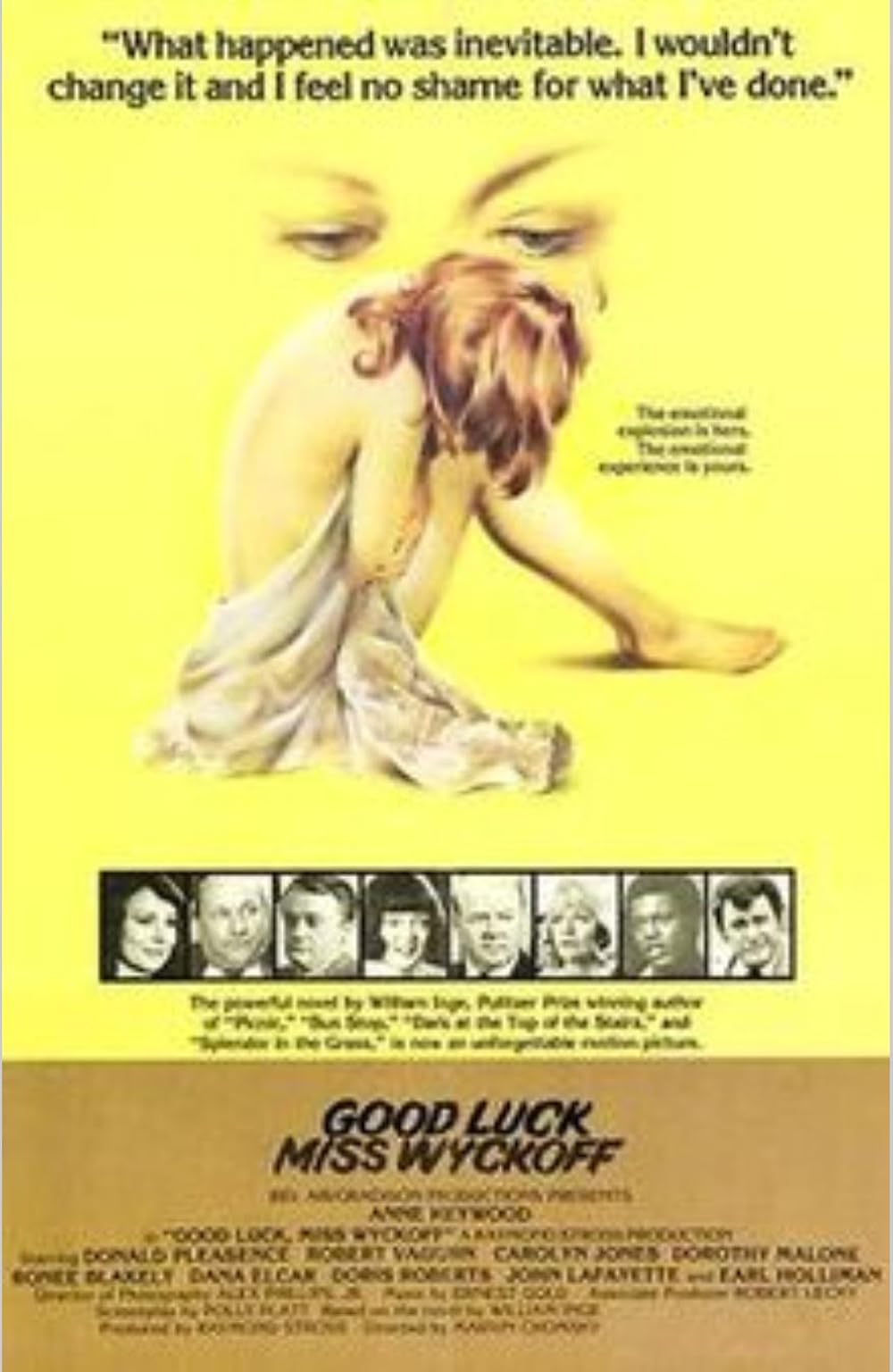
There is no "Good Morning Miss Dove", no cheers for Miss Bishop, and no warning that a newcomer is going up the down staircase. There is lust, there is violence, there is racial hatred and there's the resentment in a society against one supposedly betraying an entire race.
This is indeed not an easy film to like with a leading character (Anne Heywood) so troubled and a supporting character (John Lafayette) so vile in his obsession is that getting through it is a miracle in itself. Heywood plays a 40+ year old virgin, subject to embarrassing questions by therapist Donald Pleasance, nosy inquiries by fellow teachers (which include Carolyn Jones, Doris Roberts and Dorothy Malone) and passive/aggressive understanding by principal Dana Elcar.
The only ones seemingly understanding of her are truck driver Earl holliman (only briefly seen) and psychiatrist Robert Vaughn. This covers a few years of Heywood's life as a teacher, having struggled to help integrate the school, and paying for it with the obsessive love of Lafayette who exposes himself to her one day and rapes her brutally the next. She can't get over the feeling of the physical neediness and before long, they are having an affair that reveals her innermost thoughts, his hatred towards all humanity (even questioning her in her sincerity for her assistance in obtaining equal rights), and the bigotry of the mid-1950's, particularly in the midwest where this is set.
This is very racy for a film of the late 1970s, showing Lafayette fondling himself blatantly and later on exposing his naked body completely as he orders her to crawl to him. His character is violently hateful one moment and tenderly loving in the next, having taking her kindness a bit too far when it developed feelings for her. The scene where they are caught is truly horrifying, and the aftermath shows humanity at its lowest form, especially as her so-called friends turn against her.
However, in spite of its harshness, it shows the world in a way we wish we would never have to face, and the bravery in that is impressive. I can see the writing of William Inge (an apparent unpublished story) and the desire to film it. But it is obvious that this would never have a mainstream release, and obviously, it was too racy for television in the pre-cabpe era. Heywood and Lafayette are amazingly realistic in their performances which makes this film all the more disturbing.
Voir plus